
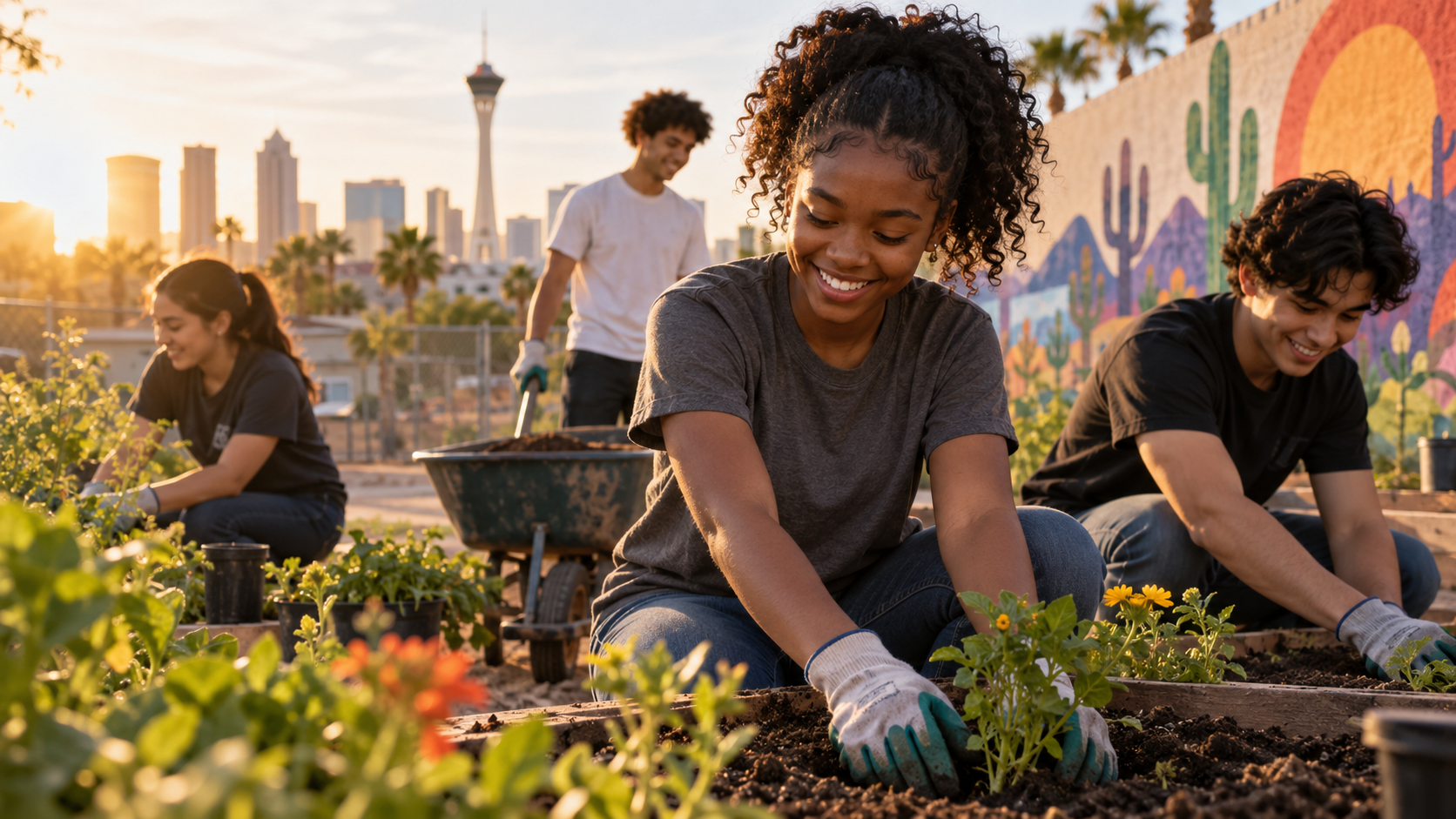
Sometimes the most valuable thing you can give is not money, experience, or expertise.
It is your time.
For a young person, volunteering can begin as something simple. A Saturday morning helping at an event. A few hours sorting donations. Reading with younger students. Cleaning up a neighborhood. Helping a coach. Serving meals. Packing care kits.
But what begins as a few hours of service can become something much bigger.
Volunteering can introduce you to people you would never have met, responsibilities you have never handled, and strengths you may not have realized you had.
And while the community benefits from your service, you are growing too.
Service Is More Than Completing Hours
For some students, volunteering begins because they need community service hours for school, an organization, a scholarship, or an application.
There is nothing wrong with that.
The mistake is believing that the number of hours is the most important part.
Meaningful service happens when you become part of what is happening around you.
You ask questions.
You learn why the organization exists.
You understand who it serves.
You notice what needs to be done and begin looking for ways to help.
That is when volunteering stops being something you are simply required to do and starts becoming an experience that can actually shape you.
You Learn Skills by Using Them
Some lessons are difficult to learn from a textbook.
How do you communicate with someone you have never met?
What do you do when the original plan changes?
How do you work with people who think differently than you?
How do you keep a commitment when you would rather stay home?
Volunteer experiences put those questions into real life.
You may find yourself organizing supplies, welcoming families, assisting younger children, managing registration, helping set up an event, solving an unexpected problem, or working alongside adults in your community.
Those experiences develop skills that matter almost everywhere: communication, teamwork, reliability, organization, patience, leadership, and problem solving.
Youth.gov reports that high quality service learning can support academic engagement, stronger social skills, goal setting, school and community connectedness, and civic participation. It can also give young people meaningful opportunities to contribute to real community needs.
You May Discover Something About Yourself
Not every teenager knows what they want to do after high school.
That is normal.
Volunteering can become a low pressure way to explore what interests you.
If you enjoy working with children, you might discover an interest in education, counseling, coaching, or youth development.
If you enjoy organizing community events, maybe you have strengths in leadership, communications, hospitality, or project management.
If you enjoy helping at an animal shelter, hospital, food pantry, recreation program, technology workshop, or environmental project, that experience may introduce you to an entire field you had never considered.
You may also discover what does not fit you.
That is useful information too.
Your Network Can Grow Naturally
People sometimes hear the word networking and imagine handing out business cards or trying to convince someone important to help them.
Real relationships usually develop much more naturally.
You show up.
You do what you said you would do.
You treat people well.
You ask thoughtful questions.
Over time, people begin to know who you are.
A volunteer opportunity may introduce you to teachers, nonprofit leaders, coaches, business owners, college students, mentors, community organizers, and professionals from industries you are curious about.
Those relationships may eventually lead to advice, recommendations, internships, career exposure, or future opportunities.
But even when they do not, they expand your understanding of the people and possibilities around you.
Confidence Often Comes After You Start
A lot of people wait until they feel confident before trying something new.
Usually, confidence works in the opposite direction.
You try something.
You realize you can handle it.
Then your confidence grows.
The first time you speak to a group may feel uncomfortable.
The first time someone depends on you may feel intimidating.
The first time you take responsibility for part of a project, you may wonder whether you are ready.
Then you do it.
And that experience becomes evidence that you are capable of doing more than you thought.
Service Can Change How You See Your Community
One of the most powerful things about volunteering is that it puts you closer to the people and issues that exist around you.
You begin seeing your community differently.
You notice needs that may have previously been invisible to you.
You also begin noticing the people who are working every day to solve those problems.
You stop seeing your community as something that simply happens around you and begin recognizing that you can help shape it.
Youth.gov notes that young people who volunteer are more likely to feel connected to their communities, and research summarized by the agency has also associated volunteering with positive educational and employment outcomes.
Do Not Just Chase Hours. Chase Impact.
There is nothing wrong with tracking service hours.
Schools and organizations may require you to.
But twenty meaningful hours can teach you more than fifty hours spent staring at the clock.
When you volunteer, ask yourself:
- Who is this helping?
- What am I learning?
- What responsibility can I take?
- What problem is this organization trying to solve?
- What could I do better next time?
That reflection turns an activity into an experience.
You Already Have Something to Give
You do not need a perfect résumé.
You do not need to be the smartest person in the room.
You do not need money.
You do not need all the answers.
Maybe you can tutor.
Maybe you can lift boxes.
Maybe you understand technology.
Maybe you are patient with younger children.
Maybe you are creative.
Maybe you can coach, organize, clean, listen, photograph, design, speak, build, write, or simply show up consistently.
Start with what you have.
Because your time has value.
And when you use it to make something better, you may discover that service changes more than the community around you.
It can change you too.
